
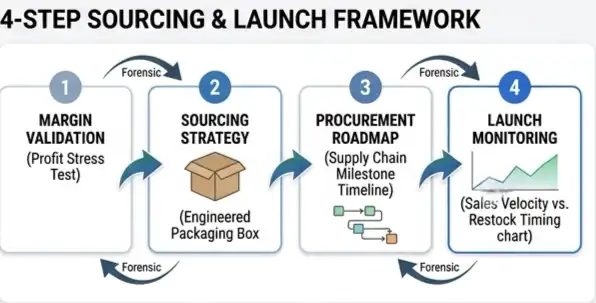
Beyond the “Default” Factory Product
Sourcing a product for e-commerce is no longer as simple as finding the cheapest factory on global B2B platforms and pasting your logo on a generic item. If you launch the exact same default product as fifty other sellers on Amazon or Flipkart, you immediately force yourself into a margin-killing price war. A profitable e-commerce sourcing strategy requires proactively engineering your product specifically to dominate search results and secure marketplace leverage.
The goal of this phase is not just to acquire inventory, but to build a unique value proposition that competitors cannot easily replicate.
Defining Specifications to Win the Buy Box
Your sourcing strategy should be directly informed by the competitor benchmarking data gathered during your initial research. We help you define the specific product specifications and features that will ultimately win the “Buy Box”.
Ready to optimize your growth?
Unlock actionable insights with our forensic financial data.
This involves analyzing the negative reviews of category leaders to find common defect complaints—such as a weak zipper or a short battery life—and instructing your factory to upgrade that exact component. Furthermore, this is the stage to implement strategic kitting. By bundling your core product with a low-cost, high-perceived-value accessory, you create a unique listing that makes it incredibly difficult for unauthorized sellers to hijack your Buy Box.
Dimensional Engineering and Packaging
During the sourcing phase, packaging must be treated as a critical financial variable, not just a branding exercise. A difference of a single inch in your final box size can push your item into an oversized marketplace fulfillment tier, instantly devastating your net profit.
A professional e-commerce sourcing strategy dictates that you work directly with your manufacturer to optimize packaging dimensions before production begins. Whether it means vacuum-sealing apparel, redesigning internal cardboard inserts to reduce bulk, or removing unnecessary retail display hooks, your product must be engineered to qualify for the lowest possible pick-and-pack fee tier.
Vetting Beyond the Price Tag
A critical error early-stage founders make is choosing a manufacturing partner based entirely on the lowest per-unit quote. A supplier with rock-bottom prices but a high defect rate or unreliable lead times will ultimately cost you your organic ranking when they cause a mid-season stockout.
Strict supplier validation is mandatory. You must negotiate quality control checkpoints, define acceptable defect thresholds, and establish clear financial penalties for delayed shipments before signing your first purchase order.
Data-Driven Negotiation
Effective sourcing relies on leverage, and leverage comes from data. Because you established your exact break-even points during the margin validation phase, you can enter factory negotiations with absolute financial clarity. Instead of blindly accepting standard Minimum Order Quantities (MOQs) that drain your working capital, you can negotiate tiered pricing and staggered delivery schedules that align perfectly with your available cash flow.
By treating sourcing as a strategic engineering process rather than a simple purchasing task, you build a protective moat around your brand. With the product specifications locked in and the supplier thoroughly vetted, you are fully prepared to map out the logistics timeline in Phase 3: The Procurement Roadmap.

Leave a Reply